
HVAC pricing
The HVAC Flat-Rate Pricing Template: Build It From Your Own Numbers
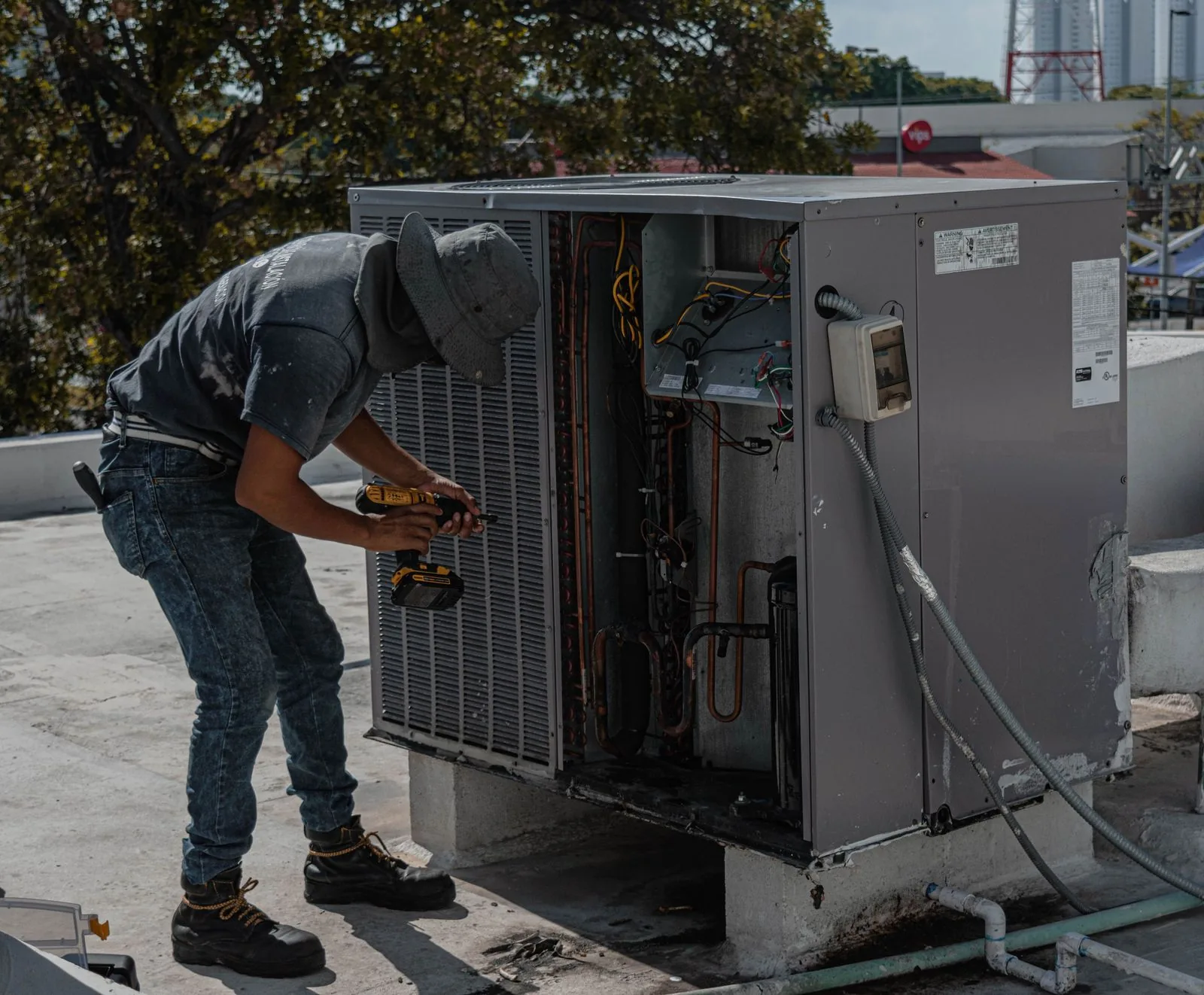
Walk into an HVAC service call priced by the hour and watch what happens. The tech diagnoses the problem, then has to sell a number he just invented. The customer hears a clock running and starts negotiating against time. The tech, who was hired for his hands, is suddenly a salesman pricing under pressure. Nobody in that scene is doing their best work.
Flat-rate pricing ends the scene. The task has a price before the truck rolls. The tech presents it with confidence because the number was decided in the office, not on the doorstep. The customer says yes or no to a number, not to a meter. And the price is the same whether your fastest tech or your slowest one runs the call.
The software vendors will sell you this book for a few hundred dollars a month. You can build it in a spreadsheet in an afternoon, from your own numbers, which are the only numbers that matter. Here is how.
Why HVAC is the ideal flat-rate trade
Service HVAC work is repetitive in the best way. A two-truck shop runs the same forty to sixty tasks all year: capacitor and contactor replacements, blower motors, ignitors, flame sensors, TXV valves, refrigerant leak searches and recharges, drain line clears, thermostat installs, zone damper motors, inducer motors, control boards, condensate pumps, and the seasonal tune-up itself.
Because the tasks repeat, the times are knowable. Pull a year of service invoices and you can see what a capacitor replacement actually takes across all your techs, in real houses, with real rusted panels and real callbacks. That average is the foundation of the book. No guesswork, no vendor template built from national averages that have nothing to do with your market and your trucks.
And because the tasks repeat, the book pays for itself in weeks. Every call that used to involve doorstep negotiation now starts from a printed number. The techs quote faster, the customers decide faster, and the office stops fielding "what should I charge for this" calls.
Step 1: your loaded labor rate per billable hour
The loaded rate is what one hour of a tech's time actually costs you. Not the wage. Everything.
Start with the tech's annual pay. Add payroll taxes, workers comp, and benefits. Add the truck: fuel, insurance, maintenance, depreciation or lease payments, divided across your techs. Add the uniforms, the training, the tools the company provides. That is the annual cost of one tech.
Now divide by billable hours, not paid hours. A tech paid for 2,080 hours a year bills maybe 1,300 to 1,500 of them. The rest is drive time, callbacks, shop time, training days, and paid time off. If the tech costs you $95,000 a year all-in and bills 1,400 hours, the loaded rate is about $68 an hour.
Do this per tech or blended across the shop. Blended is simpler and fine for most shops: total tech cost across all techs divided by total billed hours. The number is higher than you expect. It always is, the first time. That is the point.
Step 2: overhead per billable hour
Overhead is everything not tied to a job: the office, dispatch, your pay as the owner, office staff, marketing, insurance beyond the trucks, phones, software, licenses. Total it for the year. Divide by total billable hours across all techs.
Say overhead is $140,000 and the shop bills 4,200 hours a year. That is about $33 per billable hour. A one-hour capacitor call carries $33 of overhead. It does not feel like it when you are standing in a garage, but the math does not care about feelings.
Step 3: the margin divisor
Here is where price books get built right or wrong. The task price must leave your target margin after all costs, and the way to do that is the divisor, not a markup multiplier.
Task Price = (Loaded Labor Cost + Parts Cost + Overhead Share) divided by (1 minus Target Margin)
Work it for a contactor replacement. The task averages 0.75 hours. Loaded labor at $68 an hour is $51. The contactor costs you $42. Overhead share is $25. Total cost: $118. Target margin on repairs: 60%.
Price = $118 / (1 - 0.60) = $118 / 0.40 = $295.
That price keeps 60%. If you had added a 60% markup to cost instead, you would quote $189 and keep about 37.5%. The divisor is the whole game. Every price in the book runs through it.
Set your target margins by category: 60 to 70% on repairs and diagnostic-driven parts swaps, 40 to 50% on larger component replacements like blower motors and control boards, and hold the tune-up as a relationship price (we covered agreement pricing separately: the agreement is priced for membership, not margin).

Step 4: a parts markup table that scales
A single multiplier on parts either overcharges on big items or loses money on small ones. Write a tiered table and make it policy:
- Under $25 (capacitors, contactors, fuses, thermostats basic): 4 to 5 times cost. Small parts still cost a truck roll and truck stock space.
- $25 to $100 (ignitors, flame sensors, condensate pumps, zone motors): 3 to 4 times cost.
- $100 to $300 (blower motors, inducer assemblies, control boards): 2.5 to 3 times cost.
- Over $300 (compressors, coils, full air handlers): 1.8 to 2.2 times cost. The multiplier drops but the dollar margin stays healthy.
The table is the policy. When a tech is tempted to shave the price "to be nice" on a hot afternoon, the book is the answer that does not depend on willpower.
Step 5: build the task list from your own history
List your 40 to 60 most-run tasks. For each one, record the average time from your service history (not your best tech's best day), the part at the tiered markup, and run the divisor. Group by category: electrical, motors, controls, refrigerant, airflow, drains, thermostats, tune-ups.
Give every task a code and a one-line scope. The scope line is load-bearing: "Capacitor replacement: includes part, testing, and system run check. Excludes additional electrical repairs found during testing." That sentence ends the two most common doorstep arguments in the trade.
Add the diagnostic fee structure at the top of the book: the dispatch fee, what it covers, and the rule that it is credited toward the repair when the customer approves the work. The fee filters shoppers; the credit converts visits into sales. And set the after-hours multiplier now, in writing: 1.5 to 2 times the book price, decided in the office, not at midnight.
Step 6: keep it current
Prices move. Refrigerant, copper, control boards, and your own labor rate all shift. Review the book twice a year: January for the full pass, July for a mid-year check on parts costs. Because the book is formulas, the review is an afternoon, not a project. Update the loaded rate, update the parts costs, and every price recalculates.
Watch two numbers between reviews. First, the quote-to-close rate per task category: if a task's close rate drops while others hold, the price may have drifted above the market and needs a look. Second, the actual margin per task from completed jobs: if a task consistently comes in under target margin, the time estimate is wrong and the book needs the real number.

The tech conversation
A price book only works if the techs trust it. Roll it out with three rules:
1. Quote from the book, every time. No doorstep invention.
2. The book price is the price. Discounts need a manager's approval and a reason code, and the reason codes get reviewed monthly.
3. When a task takes longer than the book says, log it. The book is a living document and the techs' field data is what keeps it honest.
Techs who hated selling become comfortable fast, because they are not selling anymore. They are presenting. The number was decided by math, in the office, in daylight. All they have to do is say it with a straight face, and the book gives them the straight face.
Build the book once from your own numbers and it sets the margin on every service call your shop runs. That is the highest-leverage afternoon in the business.
The HVAC Starter 3-Pack includes a service quote sheet that totals equipment, parts, and labor as you type, a maintenance plan tracker with renewal flags that update themselves, and a service agreement log, plus a quick-start guide. $29, works in Excel and Google Sheets, ready before your next dispatch.
Put this thinking to work.
Three single-purpose tools for HVAC shops: a service quote sheet with equipment, parts, and labor; a maintenance plan tracker with self-updating renewal flags; and a service agreement log that keeps every contract in one list. $29 one-time.
See the HVAC Starter 3-Pack →Keep reading
More field notes.
Estimate Template vs. Estimating System: What Actually Wins Bids
A template makes one estimate look good. It does nothing for the next fifty. Here is the difference between a format and a system, and how to move from one to the other.
Business numbersThe 5 Numbers Every Electrical Contractor Should Track Weekly
Are you making money right now? Not last quarter. This week. Five numbers, checked in thirty minutes, tell you whether work is coming in, priced right, and actually getting paid.
The launch notes
Occasional, plain-spoken email.
New products, new playbooks, and practical notes on running a professional practice. No spam, no funnels, no daily drip. Unsubscribe anytime.